


NAIROBI, Kenya – The Kenya Bureau of Standards (KEBS) has denied claims that it allowed the importation of contaminated sugar into the Kenyan market.
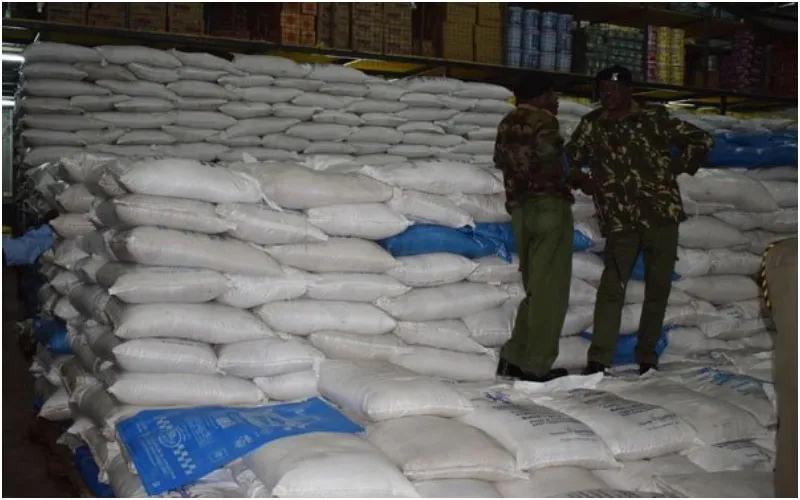
This comes after a section of opposition leaders led by Wiper leader Kalonzo Musyoka claimed that a cargo of 25,000 MT of sugar recently landed at the Port of Mombasa.
But in a statement, KEBS assured the Kenyan public that no consignment of sugar unfit for human consumption has been cleared for release into the Kenyan market.
“Our attention is drawn to statements circulating in the public domain alleging that contaminated sugar is circulating in the Kenyan market,” the statement reads in part.
How KEBS assured the Kenyan public
Through the statement seen by News 9 Kenya, KEBS stated that it remains vigilant and transparent in its duty to protect consumers.
“We urge the public to disregard unverified and alarming information circulating on social media and other platforms,” the statement reads.
However, according to Kalonzo, the 25,000 MT of sugar are already on their way to a Western Kenya sugar factory to be repackaged and sold to unsuspecting Kenyans.
“This cargo has already been declared from its port of origin, unfit for human public consumption. Yet, the Ruto regime has quickly cleared it. What kind of man is this? What kind of a regime is this that puts their own reprehensible needs before that of the public’s well-being?” posed Kalonzo.
The state agency revealed that Wajibika na KEBS is a program that allows the public to report cases of substandard products.
“To Wajibika, verify whether the S-Mark permit on your product is valid by sending the code underneath the S-Mark to 2023 (SM#Code) or the ISM Mark 2023 (ISM#UCR NO) to get product manufacturing details. If the details are different, invalid or not traceable to the platform, kindly report to KEBS through the toll-free number,” the statement further reads.
What should be done to the condemned sugar
In a statement, Kalonzo demanded that the consignment, allegedly already earmarked, be publicly condemned and destroyed, as it is unfit for public consumption.
On the other hand, KEBS moved to encourage the general public to be vigilant and inform the state agency upon encountering any products suspected to be substandard.












Discussion about this post