


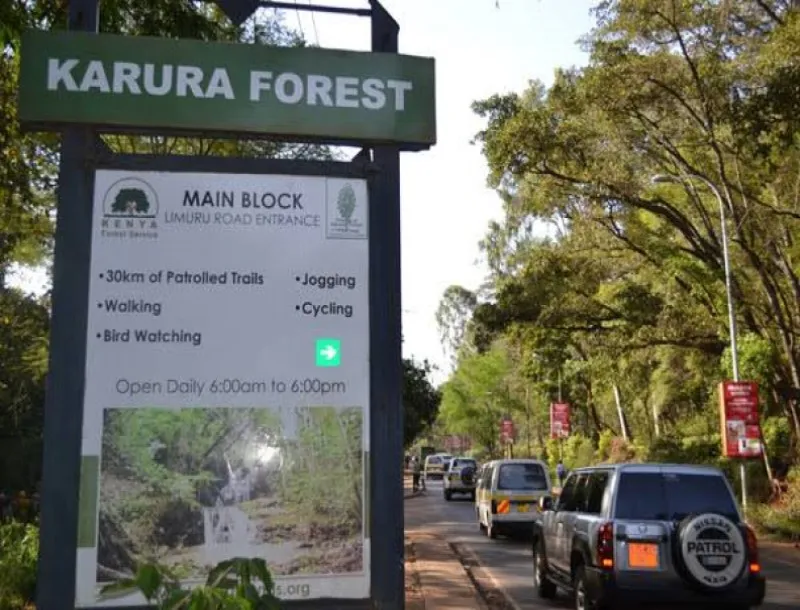
Tensions flared on Friday at Karura Forest after members of the Friends of Karura Forest Association (FKF) staged a protest against the Kenya Forest Service (KFS), accusing it of sidelining them in the management of the popular urban green space.
The uproar followed KFS’s announcement that entry payments to Karura Forest would now be made exclusively through the government’s e-Citizen platform.
FKF argues that the move disregards the Karura Forest Management Plan (2021–2041), a legally recognized framework that mandates joint management between the community-based association and KFS.
In a strongly worded statement, FKF said it was neither consulted nor informed about the changes.
“This is not what we had agreed in our management framework. This move blatantly disregards the existing Karura Forest management plan (2021–2041), a 20-year agreement that clearly mandates the joint management of the forest between KFS and Friends of Karura,” the association said.
The group recalled that before its involvement, Karura Forest suffered insecurity and neglect, a situation that changed when the community took a leading role in conservation and management.
Videos circulating online showed visibly agitated members chanting, banging sticks and hitting plastic bins in protest. Some carried placards decrying what they termed a unilateral takeover by KFS. The protests attracted the presence of KFS officers, who were deployed to monitor the situation.
The standoff hinges on two main issues: who has the authority to manage Karura Forest and whether payments for entry should be channeled through the e-Citizen system.
KFS, however, stood by its decision. In a statement posted on X, the agency confirmed the rollout, saying:
“Karura Forest goes live with e-Citizen payment. Smooth transition this morning as visitors to Karura Forest pay entry fees through the platform.”
FKF insists the decision undermines its role in conservation and may have ripple effects on the community-led model that has, for years, been praised as a success story in urban forest management.
Karura Forest, covering more than 1,000 hectares, is one of Nairobi’s largest natural green spaces. For years, it has been co-managed by KFS and FKF, with the arrangement celebrated internationally as a benchmark for participatory forest management.
Friends of Karura describes itself as a voluntary membership organization made up of resident associations, corporate groups, and individuals committed to protecting the forest for future generations.
On its website, the association notes that it played a central role in transforming Karura from a neglected and insecure woodland into one of Nairobi’s most visited green spaces, popular with walkers, joggers, cyclists and nature lovers.













Discussion about this post